


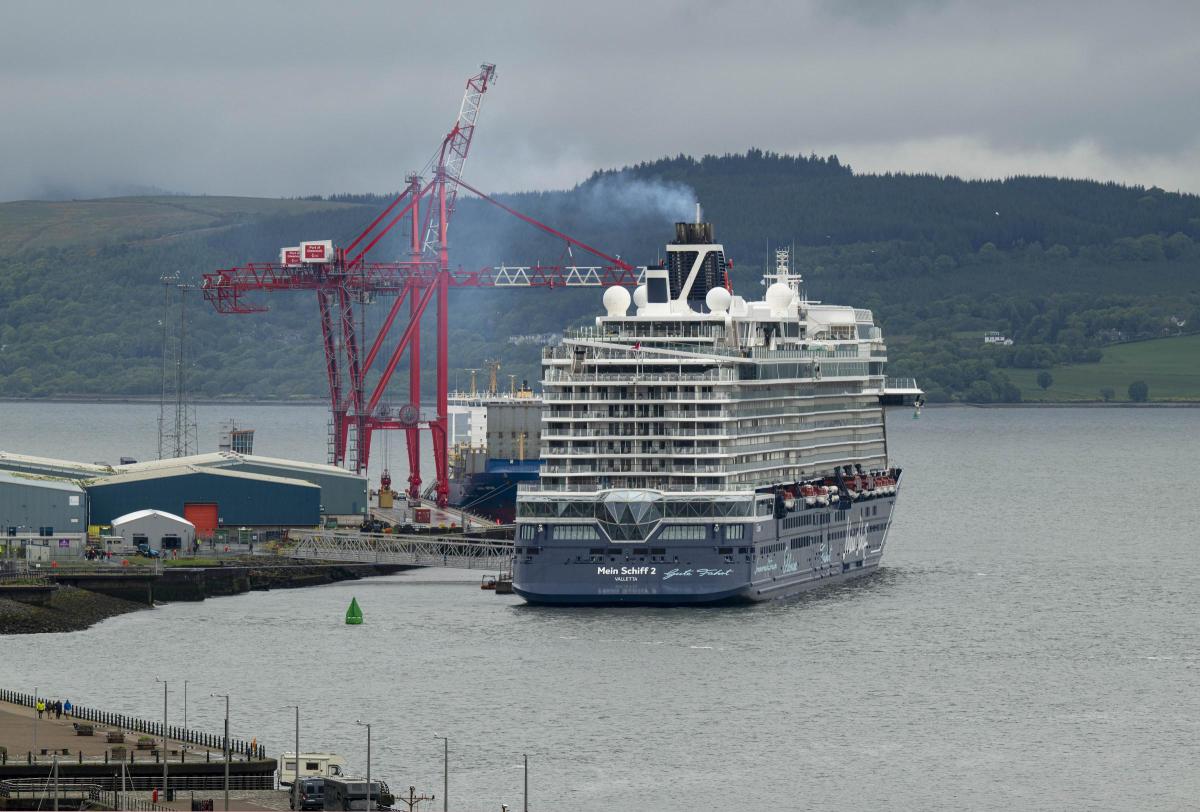
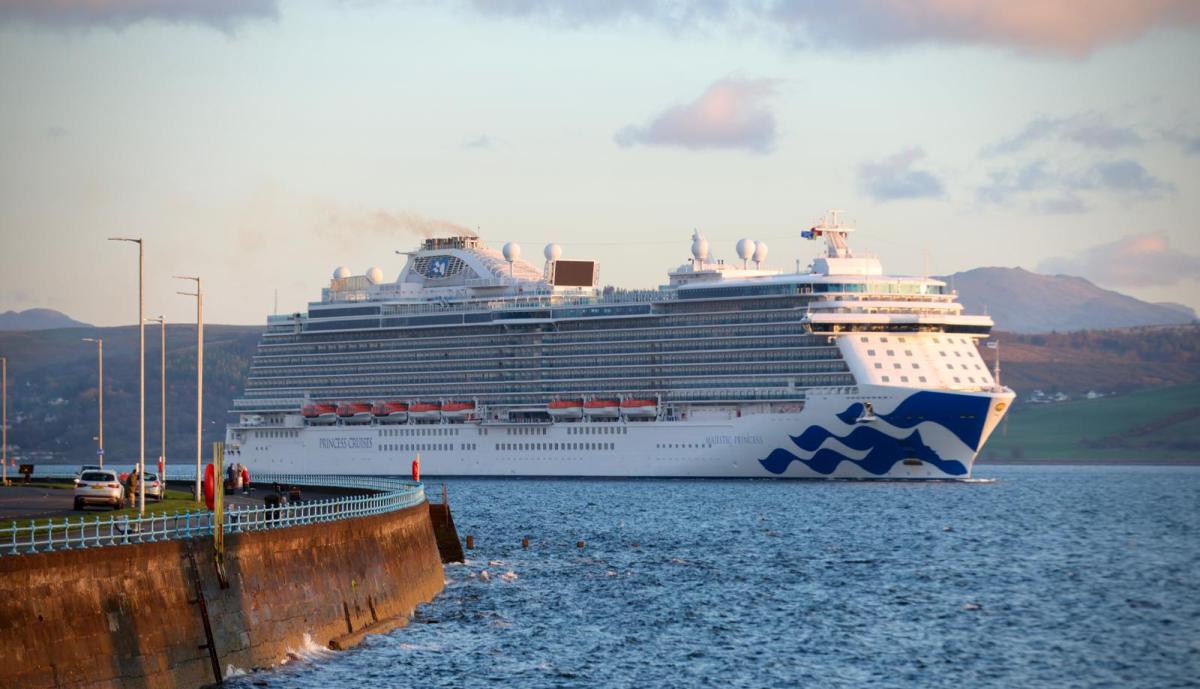

GREENOCK has been named as one of the most polluted ports in the UK by environmental - after data revealed that harmful emissions from cruise ships calling at the town produce more than 25 times more pollution than all the town's cars combined.
According to campaign group Transport and Environment, Greenock ranks third overall for sulphur oxide (SOx) pollution in the UK.
It ranks seventh for nitrous oxide overall, and sixth for particulate matter (PM2.5).
Cruise ships account for 65 per cent of the port's SOx but only 25 per cent of port calls.
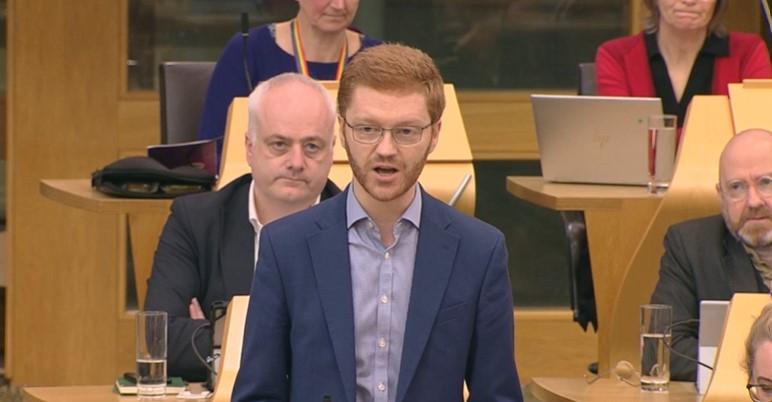
West Scotland MSP Ross Greer said more needs to be done to tackle the ships’ impact on air quality.
READ MORE:
Greenock cruise ship levy 'should not be based on environmental impact', council says
Levy on cruise ships would make Inverclyde look 'penny pinching', claims councillor
How Greenock’s cruise ship terminal hopes to keep more passengers in Inverclyde
Greenock cruise port celebrates 'record breaking' year with over 100,000 passengers
'We make sure cruise ship passengers get the best welcome to Greenock'
The Scottish Greens' co-leader said: "We can’t keep ignoring the environmental, financial and public health impact of cruise ships, both globally and here in Greenock.
"One cruise ship pumps out the same emissions as 12,000 cars. On top of that, their pollution has a big impact on local air quality, as we can see from these new figures.
"Greenock residents are literally breathing in the fumes from the ships at the same time as they have to cover the costs of their impact on local services through council tax.

“The ships and their passengers pay nothing towards the additional wear and tear they cause local roads, for example.”
Mr Greer, who represents the West Scotland region, including Inverclyde, called for the ships causing the most pollution to pay more through the new cruise ship levy - a step he says would encourage cruise lines to upgrade ships and reduce pollution.
He said: "The Scottish Greens secured the introduction of a cruise ship levy to make sure these companies start paying their fair share.

“The Scottish Government needs to move ahead and give that power to councils as soon as possible.
“That will at least allow the council to raise money from the visiting ships and invest it in local services.”
The Transport and Environment data comes from analysis carried out at the Greenock port in 2024.
The research was carried out in response to the UK Government’s Cruise Growth Plan, which the group says fails to mitigate the 'disproportionate impact' of cruise ships.
MSP Stuart McMillan suggested the levy should be tied to pollution levels rather than footfall.
READ MORE:
'Visitor levy changes could enhance what Inverclyde has to offer to visitors'
Greenock welcomes record number of cruise ships with 140k tourists expected this year
Council leader hits out at 'delay' to introduction of cruise ship levy legislation
First cruise ship of Greenock 2026 sailing season arrives in Inverclyde this morning
No decision likely until 2026 on bringing in a 'cruise ship levy' for Inverclyde
He said: “It’s widely known that cruise ships contribute to both greenhouse gas emissions, such as carbon dioxide, and also local air pollution through sulphur dioxide, nitrogen dioxide and particulate emissions.
“Many cruise operators have already been making significant investments in reducing emissions, and I would welcome a policy that rewards this by resulting in reductions in levy duties.”
Mr McMillan says he's well aware of claims that any additional levy on cruise ships could put companies off including Greenock on their itineraries, but says he's not convinced by that line of argument.
"I have met with cruise ship companies and industry associations since the pandemic," he continued, "and they are all saying that cruising is growing in popularity.
“Further, cruise ship levies already exist in other countries and yet cruise ships still dock there.

“If the levy is tied to the level of emissions, it should mean operators pay less if they take steps to improve its sustainability credentials, which I would welcome.
“Either way, a levy which provides Inverclyde with additional monies for tourism and or environmental measures, I would support.”
Martin McCluskey MP said decarbonisation of transport and maritime is ‘absolutely essential’ to reduce pollution and hit climate targets.
He said: “We know that Greenock benefits significantly from cruise tourism, with more than 200,000 visitors coming through the terminal this year alone.
“The Government has identified shoreside power as one of the most effective ways of reducing emissions from ships while they are berthed.
“By allowing vessels to plug into the electricity grid and switch off their engines, emissions can be dramatically reduced.”
He said the industry is ‘actively promoting’ onshore power supply infrastructure to achieve net-zero emissions targets by 2050.
The Labour MP added: “Supporting cleaner technology and cleaner fuels is the best way to secure both the economic benefits of cruise tourism for our area and the environmental improvements we expect, so we can continue to welcome visitors while reducing the environmental impact.”
A Scottish Government spokesperson said: “A consultation was undertaken last year where the Scottish Government actively engaged with the public, local authorities, the cruise ship industry, and port stakeholders to explore the potential introduction of a Cruise Ship Levy in Scotland with an analysis of results published in March.
"The range of evidence received will be considered by the current Scottish Government. This work is part of our broader commitment to positioning Scotland as a world leader in 21st-century, responsible tourism.”
Greenock Cruise Port have been contacted for comment.


Share